
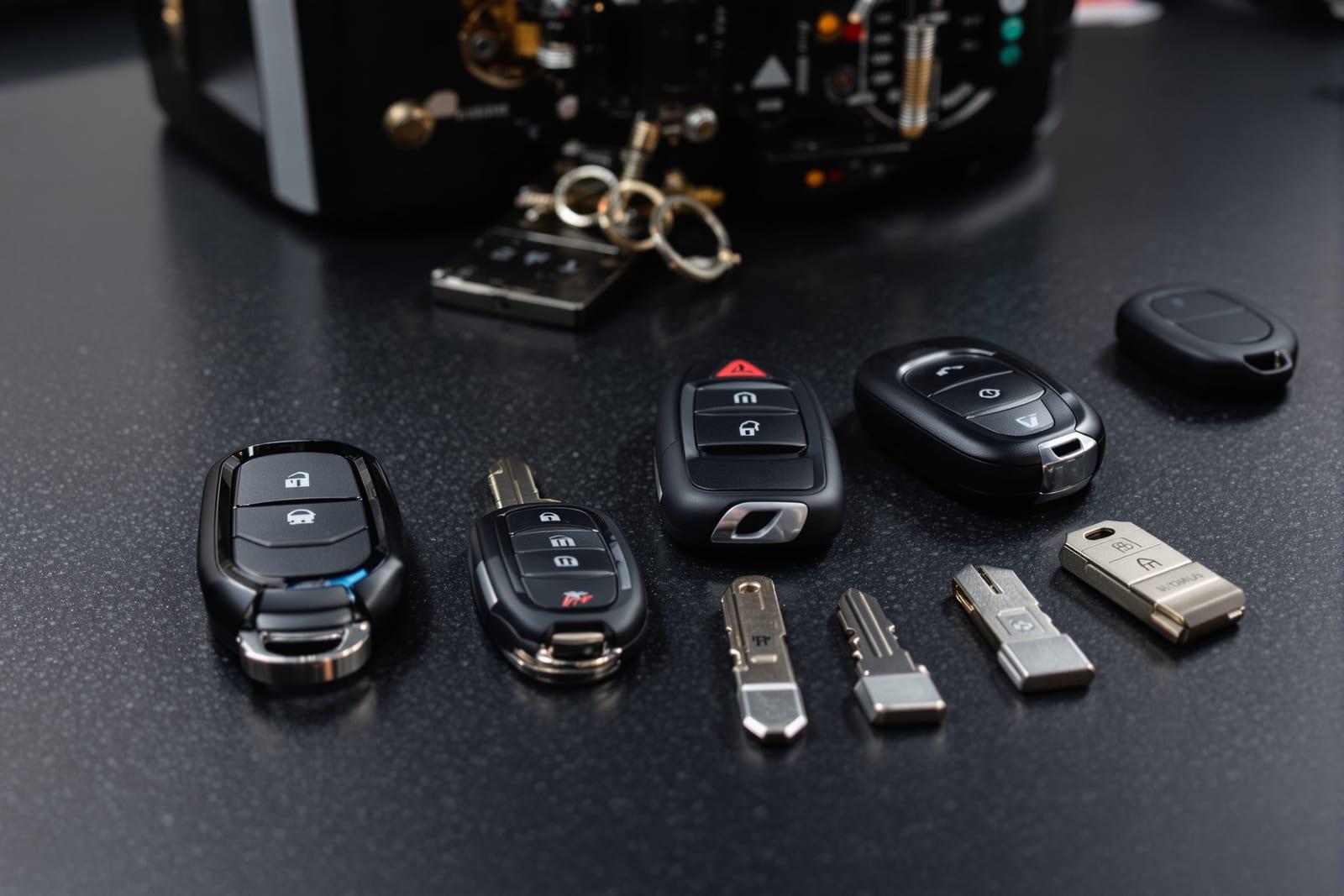
Quick answer
Big Daddy Car Key Replacement cuts and programs car keys on site for 42 makes and 8,413 model years from 1990 to 2026, including transponder keys, remote head keys and push-to-start smart keys. Service is mobile and open 24 hours across Los Angeles County and Ventura County. Call (562) 550-7206.
Last updated
- Business
- Big Daddy Car Key Replacement
- Service area
- Los Angeles County and Ventura County, California
- Hours
- Open 24 hours, 7 days a week
- Service type
- Mobile, at your location
- Address
- 450 W Wilken Way, Anaheim, CA 92802
- Phone
- (562) 550-7206
On this page
Find your vehicle
This directory covers 42 makes, 620 models and 8,413 individual model years from 1990 to 2026. Choose your make to see its models, then your model and year for the exact key type and how it is replaced. For an overview of the service itself, see car key replacement.
- Acura key replacement
Acura adopted laser-cut keys and immobilizers earlier than most brands, and its Keyless Access proximity system spread across the range from the RL in 2005. Many Acura smart keys are tied to driver memory positions, so each key is numbered.
- Alfa Romeo key replacement
Every Alfa Romeo sold in the U.S. since the brand returned uses a proximity fob with push-button start. Programming goes through a secured gateway, so the correct fob and authorized diagnostic access are essential.
- Audi key replacement
Audi keys are laser-cut flip keys or slot-type fobs, with Advanced Key proximity entry on many trims. Audi immobilizers are linked across several modules, and some recent models require keys pre-coded to the car by VIN.
- BMW key replacement
BMW moved from EWS chip keys to the CAS slot-fob system in the mid-2000s and then to FEM and BDC modules with Comfort Access. Each generation needs different equipment, and the newest G-series cars often require a dealer-ordered key.
- Buick key replacement
Older Buicks used GM’s resistor-pellet PASS-Key before moving to transponder keys around 2000. From 2010 the brand switched to laser-cut flip keys and then to proximity fobs with push-button start.
- Cadillac key replacement
Cadillac introduced proximity keys early on the XLR and STS, and its trucks moved from Passlock to transponder keys in 2007. Late-model Cadillacs use encrypted fobs that are programmed through GM’s secured system.
- Chevrolet key replacement
Chevrolet key technology varies widely by model: full-size trucks and SUVs used Passlock without a chip until 2007, while cars like the Impala had transponders from 2000. Since 2010 most Chevrolets use laser-cut flip keys or proximity fobs.
- Chrysler key replacement
Chrysler introduced the Sentry Key immobilizer in the late 1990s and the Fobik pod key in 2008, followed by Keyless Enter-N-Go proximity fobs. Vehicles from 2018 onward have a secure gateway that needs authorized access for programming.
- Dodge key replacement
Dodge keys progressed from plain metal keys to Sentry Key transponders, then Fobik pod keys in 2008, and proximity fobs on performance and family models from 2011. Charger and Challenger theft has made correct, secure programming especially important.
- Fiat key replacement
Fiat models use laser-cut flip keys with a transponder, and newer or sportier models use a proximity fob. A security PIN read from the car is required for programming.
- Ford key replacement
Ford’s PATS immobilizer arrived in 1996 and spread across the range by the early 2000s. Many Fords let you add a key yourself if you already have two working keys, which is the best reason to never be down to one.
- Genesis key replacement
Every Genesis has used a proximity smart key with push-button start since the brand launched, and newer models add a digital phone key and fingerprint start. Programming requires a PIN and a compatible OEM-grade fob.
- GMC key replacement
GMC trucks and SUVs used Passlock, with no chip in the key, until the 2007 redesign brought transponder keys. Laser-cut flip keys followed around 2010 on crossovers, and push-button start reached the pickups later.
- Honda key replacement
Honda began fitting immobilizers in 1998 and laser-cut keys soon after. Honda transponder keys cannot be self-programmed; a diagnostic tool is always needed, even to add a spare.
- Hummer key replacement
The H2 and H3 share GM truck electronics of their era, so earlier models rely on Passlock and later ones on transponder keys. The military-derived H1 uses simple mechanical keys.
- Hyundai key replacement
Many keyed-ignition Hyundai models built through 2021 left the factory without an engine immobilizer, so their keys have no chip, while push-button models always have one. We check which system your car has before quoting.
- Infiniti key replacement
Infiniti was an early adopter of the Intelligent Key, first as a twist-knob ignition and then with push-button start. Most Infinitis from 2007 on use a proximity fob, programmed with a PIN calculated from the car’s body control module.
- Isuzu key replacement
Isuzu passenger vehicles sold in the U.S. mostly used straightforward mechanical keys, and the later Ascender and i-Series shared GM’s Passlock system. Isuzu commercial trucks remain common on local roads and use simple keys cut by code.
- Jaguar key replacement
Older Jaguars use the distinctive Tibbe key, while models from about 2009 use a proximity Smart Key with push-button start. Jaguar immobilizer data is stored in several modules, so programming takes specialized equipment.
- Jeep key replacement
Jeep keys range from basic metal keys on older Wranglers to Sentry Key transponders, Fobik pod keys and proximity fobs. Wranglers are often driven with doors off, and lost keys on the trail or at the beach are a common call.
- Kia key replacement
Like Hyundai, many keyed-ignition Kia models through 2021 were built without an immobilizer and use a plain or remote-head key with no chip. Push-button Kias always use an encrypted smart key. We confirm which you have before starting.
- Land Rover key replacement
Land Rover keys moved from remote-head keys to dock-style fobs and then to full proximity Smart Keys. As with Jaguar, the immobilizer spans several modules, and some of the newest models need dealer-supplied keys.
- Lexus key replacement
Lexus has used laser-cut keys since the first LS and added SmartAccess proximity keys in the mid-2000s. A Lexus with every key lost can usually still be programmed on site, though some models need the immobilizer reset first.
- Lincoln key replacement
Lincoln shares Ford’s PATS immobilizer and added Intelligent Access proximity keys from 2009, along with the SecuriCode door keypad. If you know the keypad code, we can often get into a locked Lincoln in seconds.
- Mazda key replacement
Mazda added immobilizers around 2000 and Advanced Keyless Entry in the mid-2000s. Since 2013 most Mazdas have push-button start, even where the fob still looks like a conventional remote.
- Mercedes-Benz key replacement
Since the late 1990s Mercedes-Benz has used the SmartKey, an electronic key with no conventional ignition blade, with Keyless-Go as an option. Keys for many 2015-and-newer models are supplied only by the dealer against the VIN.
- Mercury key replacement
Mercury models are mechanical twins of Fords and use the same PATS transponder keys. Parts and key blanks remain easy to source even though the brand ended in 2011.
- Mini key replacement
First-generation Minis use a laser-cut remote-head key, and models from 2007 use a round fob that docks in the dash, with Comfort Access optional. Mini shares BMW’s CAS and later FEM systems.
- Mitsubishi key replacement
Mitsubishi phased in immobilizers from about 2000 and later offered the FAST-Key proximity system. Programming needs a PIN and, on some models, registration of each remote separately from the chip.
- Nissan key replacement
Nissan’s NATS immobilizer spread across the lineup around 2000, and the Intelligent Key followed in the mid-2000s. Every Altima since 2007 has push-button start, making it one of the most common smart-key cars on the road.
- Oldsmobile key replacement
Most Oldsmobiles relied on GM’s PASS-Key resistor keys or Passlock, not a transponder chip. Blanks and resistor values are still available, so keys can be made for these cars even though the brand closed in 2004.
- Pontiac key replacement
Pontiac key systems depend on the platform: PASS-Key resistor keys on older models, Passlock on compacts, and transponder keys on later sedans and the Toyota-built Vibe. Identifying the exact system comes first.
- Porsche key replacement
Porsche keys are laser-cut with the remote in the head, and newer models use a car-shaped fob that turns in the dash, with Entry & Drive proximity optional. Many late-model Porsche keys are dealer-supplied.
- Ram key replacement
Ram trucks use remote-head and Fobik keys, with Keyless Enter-N-Go proximity fobs on higher trims since 2013. Trucks from 2018 on have a secure gateway module, and ProMaster vans use a laser-cut flip key.
- Saturn key replacement
Saturn used Passlock on the S-Series, Ion and early Vue, with transponder keys on the L-Series and the later Aura, Outlook, Sky and redesigned Vue. Keys remain available for all of them.
- Scion key replacement
Scion models use Toyota key systems, typically a transponder key with a separate remote. The FR-S shares its key system with Subaru, and the iA uses Mazda’s push-button start.
- Subaru key replacement
Subaru introduced immobilizers on the 2005 Legacy and Outback and extended them through the range by 2008. Push-button start arrived on upper trims from 2013 and is now common across the lineup.
- Suzuki key replacement
Suzuki left the U.S. car market in 2013, but its vehicles are still on the road and keys can still be cut and programmed. Some models offered the SmartPass keyless system.
- Tesla key replacement
Teslas do not use conventional keys. Access is by phone key, key card or an optional fob, all paired through the car’s touchscreen or the Tesla account, so replacement works differently from any other brand.
- Toyota key replacement
Toyota introduced transponder keys in 1998 and the Smart Key System with the 2004 Prius. Toyotas are among the most common vehicles in Southern California, so keys, remotes and smart fobs for them are always stocked.
- Volkswagen key replacement
Volkswagen keys are laser-cut, usually flip keys, and the immobilizer has gone through several generations. Each generation needs a different procedure, and some of the newest models require a dealer-ordered, VIN-coded key.
- Volvo key replacement
Volvo moved from laser-cut flip keys to dash-slot remote keys in the mid-2000s and to proximity fobs after 2016. Volvo software is tightly controlled, so some models need keys supplied and coded through the dealer network.
Types of car keys
Traditional metal key
A traditional key works purely mechanically. Cuts along the blade lift a row of wafers inside the lock to the right height, the cylinder turns, and the car starts. There is no chip to program. Some vehicles of this period add a separate anti-theft layer, such as a resistor pellet in the key blade or a sensor in the ignition, that the key or lock must satisfy. With the vehicle in front of us, a mechanical key is typically finished in 15 to 30 minutes, a little longer when locks are worn and need decoding by hand.
Transponder chip key
A transponder key looks like an ordinary key with a plastic head, but the head holds a tiny chip with no battery. When you turn the ignition, an antenna ring around the lock energizes the chip and asks for its code. If the immobilizer recognizes the answer, it lets the engine run. If not, the engine cranks without starting or starts and dies within seconds. A spare transponder key is usually done in 15 to 30 minutes. An all-keys-lost job takes longer, commonly 30 to 60 minutes, because security access takes time on many systems.
Remote head key
A remote head key puts three parts into one housing: a cut metal blade, a transponder chip that satisfies the immobilizer, and a remote transmitter for lock, unlock, trunk and panic. Flip keys, where the blade folds into the fob, work the same way. The remote and the chip are separate systems and are often programmed in separate steps. Expect 20 to 40 minutes for most remote head keys with the vehicle present, and somewhat longer when all keys are lost.
Smart proximity key
A smart key never needs to leave your pocket. Antennas in the doors and cabin detect it, the doors unlock when you touch the handle, and the engine starts with a button once the car confirms the key is inside. The key and car exchange encrypted, constantly changing codes. A small metal emergency blade hides inside the fob for the door lock when the fob battery is flat. Most smart keys take 30 to 60 minutes including programming. Vehicles that need server authorization or have all keys lost can take longer.
| Key type | Has a chip | Needs programming | Typical time on site |
|---|---|---|---|
| Traditional metal key | No | No | 15 to 30 minutes |
| Transponder chip key | Yes | Yes | 15 to 60 minutes |
| Remote head key | Yes | Yes, chip and remote | 20 to 40 minutes |
| Smart proximity key | Yes, encrypted | Yes | 30 to 60 minutes |

How car key replacement works
Call with the year, make and model
Tell us you need a key for a your vehicle, whether any working key remains, and where the vehicle is parked. We give you a price range and an estimated arrival time before anyone drives out.
We verify ownership
Before making any key we check a photo ID against the registration, title or insurance for the vehicle. It takes a minute and it protects every owner from having a key made for their car by someone else.
We identify the exact key system
Using the VIN and the vehicle itself, the technician confirms the key blank, chip type, remote frequency and immobilizer generation, so the right parts and procedure are used the first time.
The key is cut to code
The blade is cut on a code machine in the van to original factory depths, not traced from a worn key. It is then tested in the door, trunk and ignition.
The key is programmed to the car
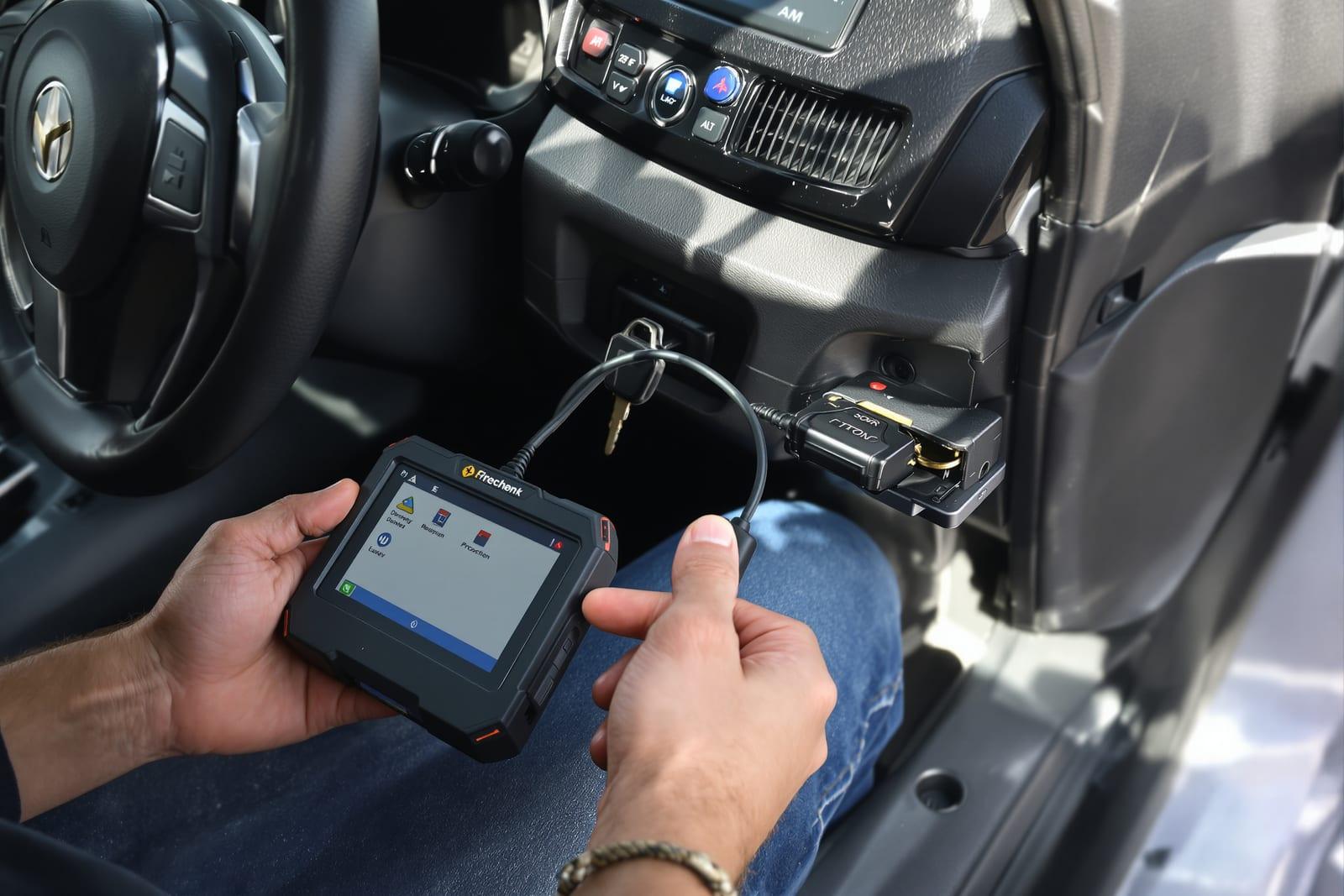
For chip and smart keys, we connect to the diagnostic port, obtain security access, and register the new key. Lost keys can usually be erased from memory at the same time.
Everything is tested before we leave
We start the engine several times, test every remote button and the emergency blade, and make sure any keys you already had still work.
What to have ready
- A government-issued photo ID
- The vehicle registration, title or current insurance card in your name
- The VIN, found on the dashboard at the base of the windshield, the driver’s door jamb, and your registration
- Any remaining keys or remotes, including ones that no longer work
- The vehicle itself, parked where a technician can open the driver’s door fully
Mobile locksmith or dealership?
| Mobile locksmith | Dealership | |
|---|---|---|
| Where the work happens | At your vehicle, wherever it is parked | At the dealer’s service department |
| Towing with all keys lost | Not needed | Usually required |
| Availability | Open 24 hours, including weekends and holidays | Service department business hours |
| Typical wait | Often the same day | Appointment, plus time to order the key by VIN |
| Key options | OEM or quality aftermarket where available | OEM only |
| Restricted late-model systems | Some require a dealer key; we tell you up front | Supported |
A car key that is cut wrong can jam in the ignition, and a programming attempt with the wrong procedure can lock an immobilizer for hours or erase the keys that still work. Automotive locksmiths invest in manufacturer-level tools and current software for exactly that reason. We also verify ownership before making any key, a step that anonymous online sellers and key kiosks skip.
What affects the cost of a car key
- Key technology
- A plain metal key costs the least, a transponder key more, a remote head key more again, and a proximity smart key the most, because of the parts and the programming involved.
- Whether a working key exists
- Copying or adding a key with a working original present is quicker than an all-keys-lost job, which requires generating the cut code and gaining security access to the immobilizer.
- Model year and system generation
- Two cars with the same name can use very different systems a few years apart. Newer encrypted systems need more expensive equipment and sometimes online authorization.
- OEM or aftermarket parts
- Where a quality aftermarket key exists, it usually costs less than the manufacturer’s part and works the same. Some vehicles accept only OEM keys.
- Lock or ignition condition
- If the ignition or door lock is worn or damaged, it may need repair so the new key turns properly. We check before cutting.
- Time and location
- Late-night calls and long distances can affect the price. You are given the range on the phone, before dispatch.
Car key terms explained
- Transponder
- A small chip in the key head that answers a coded radio signal from the car so the engine is allowed to run.
- Immobilizer
- The anti-theft system that prevents the engine from running unless it recognizes a programmed key.
- Remote head key
- A key with the lock and unlock buttons built into its head, alongside the blade and chip.
- Proximity key
- A fob the car detects nearby, allowing keyless entry and push-button start. Also called a smart key.
- Laser-cut key
- A key with a groove milled into the side of a thick blade, cut on a computer-controlled machine. Also called a sidewinder.
- All keys lost
- A job where no working key exists, so the key must be generated from the VIN or the lock and programmed from scratch.
- VIN
- The 17-character vehicle identification number, found on the dashboard, the door jamb and the registration.
- Key code
- A number that defines the exact cuts of a key, allowing it to be cut to factory specification without an original.
- Diagnostic port
- The connector under the dashboard through which keys are programmed to the vehicle’s computer.
Advice from our technicians
- Have a spare made while you still have one working key. It is the cheapest and fastest car key you can buy.
- Photograph your VIN and keep a copy of your registration on your phone so ownership can be verified quickly.
- Keep the spare at home, not in the car. A key hidden in or under the vehicle defeats the immobilizer for a thief.
- Replace a fob battery at the first low-battery warning, and use the brand and size printed inside the fob.
- Do not hang heavy keychains from the ignition key. The weight wears the ignition cylinder over time.
- If a key starts sticking, deal with it early. A worn key or ignition gets worse, never better.
- Check your auto insurance and roadside plan. Some reimburse key replacement or lockout service.
- Attach a tracker tag to your keys if you misplace them often, and remove any tag showing your address.
- When buying a used car, insist on all keys and have lost ones erased from the car’s memory.
- Be cautious with very cheap keys sold online. Many have the wrong chip or frequency and cannot be programmed.
Where we provide car key replacement service
Big Daddy Car Key Replacement is a mobile locksmith serving 140 communities across Los Angeles County and Ventura County. Technicians travel to homes, businesses and vehicles from the San Fernando Valley and the Westside to the South Bay, the Gateway Cities, the San Gabriel and Pomona Valleys, Santa Clarita, the Antelope Valley and Ventura County. Choose your community below for local details, or call (562) 550-7206 and tell us where you are.
San Fernando Valley
- Arleta
- Canoga Park
- Chatsworth
- Encino
- Granada Hills
- Lake Balboa
- Lake View Terrace
- Mission Hills
- North Hills
- North Hollywood
- Northridge
- Pacoima
- Panorama City
- Porter Ranch
- Reseda
- San Fernando
- Sherman Oaks
- Studio City
- Sun Valley
- Sylmar
- Tarzana
- Toluca Lake
- Valley Glen
- Valley Village
- Van Nuys
- West Hills
- Winnetka
- Woodland Hills
Burbank, Glendale & Foothills
Las Virgenes & Malibu
Westside
Central & South Los Angeles
South Bay
- Carson
- El Segundo
- Gardena
- Hawthorne
- Hermosa Beach
- Inglewood
- Lawndale
- Lomita
- Manhattan Beach
- Palos Verdes Estates
- Rancho Palos Verdes
- Redondo Beach
- Rolling Hills
- Rolling Hills Estates
- Torrance
- West Carson
Gateway Cities
- Artesia
- Bell
- Bell Gardens
- Bellflower
- Cerritos
- Commerce
- Compton
- Cudahy
- Downey
- Hawaiian Gardens
- Huntington Park
- La Habra Heights
- La Mirada
- Lakewood
- Long Beach
- Lynwood
- Maywood
- Montebello
- Norwalk
- Paramount
- Pico Rivera
- Santa Fe Springs
- Signal Hill
- South Gate
- Vernon
- Whittier
San Gabriel Valley
- Alhambra
- Altadena
- Arcadia
- Azusa
- Baldwin Park
- Bradbury
- City of Industry
- Covina
- Diamond Bar
- Duarte
- El Monte
- Glendora
- Hacienda Heights
- Irwindale
- La Puente
- Monrovia
- Monterey Park
- Pasadena
- Rosemead
- Rowland Heights
- San Dimas
- San Gabriel
- San Marino
- Sierra Madre
- South El Monte
- South Pasadena
- Temple City
- Walnut
- West Covina
Pomona Valley
Santa Clarita Valley
Antelope Valley
Ventura County
Santa Catalina Island
Car key replacement: frequently asked questions
Can you make a key for a your vehicle if I have lost every key?
In most cases, yes. We cut a new key from the VIN-based code or by reading the lock, then program it to the vehicle on site. A few late-model systems require a dealer-supplied key, and we tell you that before scheduling.
Do I have to tow my your vehicle to you?
No. We are a mobile service. The key machines and programming equipment are in the van, and the work is done where the vehicle is parked.
What do you need from me to make a your vehicle key?
A photo ID and proof that the vehicle is yours, such as registration, title or insurance, plus access to the vehicle. Having the VIN ready when you call speeds things up.
Will my lost your vehicle key still start the car?
For chip and smart keys we can usually erase lost keys from the car’s memory during programming, so they no longer start the engine. A lost key could still open the door mechanically unless the locks are rekeyed.
Is a locksmith-made vehicle key as good as a dealer key?
Yes. A key cut to factory code with the correct chip and remote performs the same as one from the parts counter. Where we use aftermarket parts, we say so and offer OEM when available.
Can you make a your vehicle key at night or on a weekend?
Yes. We are open 24 hours, seven days a week, including holidays, which is when dealership parts and service departments are closed.
How much does a your vehicle key cost?
It depends on the key type for your exact trim and on whether you still have a working key. Call (562) 550-7206 with the year, make and model and we will give you a price range before sending anyone.
Can you program a key I bought online for my your vehicle?
We can try, if it is the correct part. We test the chip and frequency first. Many low-cost online keys are the wrong type or locked to another car, so we cannot guarantee a customer-supplied key.
Do you also repair the ignition on a your vehicle?
Yes. If the key will not turn, will not come out, or the cylinder is damaged, we repair or replace the ignition and match it to your key where possible.